Airbnb
Airbnb is the world's leading platform for short-term rentals, connecting travelers with unique stays across 8M+ listings worldwide.
My Team redesigned the search experience to help users quickly find accommodations aligned with their trip intent.
Key Insight
Trip details is fragmented
Users must manage multiple pieces of information about the stay.
This information is scattered across messages and trip details, making it harder to navigate the trip smoothly.

The Mission
Aligning user behavior to support decision making
Millions of listings and travel features exist on Airbnb, but the experience didn't support users' decision-making across the full journey of discovering, booking, and staying in the right place for their trip.

Friction points in user journey and touchpoints
Key Insight
Navigating Airbnb's nature of variability
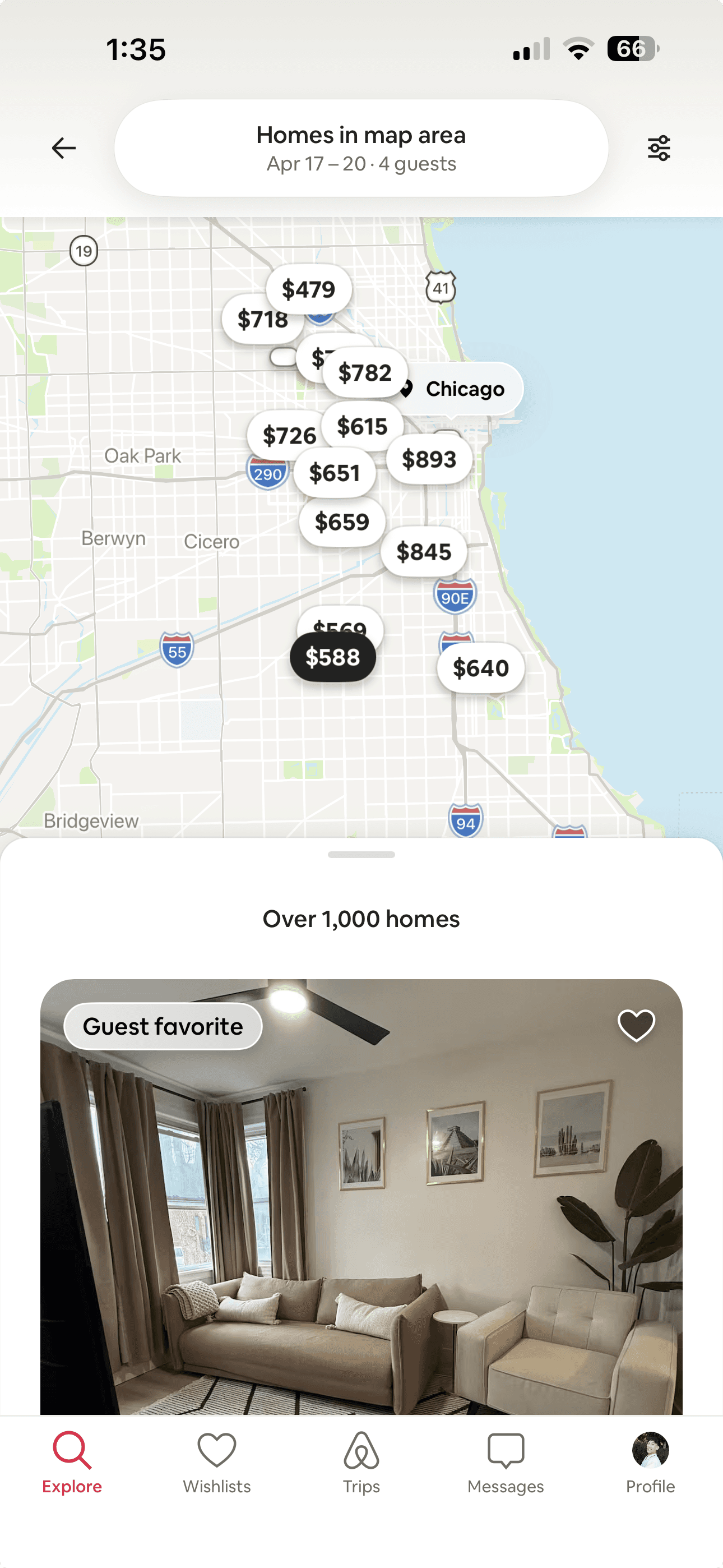
Airbnb's strength lies in the diversity of listings.
However, the variability between stays makes it harder for travelers to compare options and predict their experience, especially for the location of stay.
Solution
Destination-driven stay discovery
Reduce the number of listings with the criteria that users think the most. Since there are millions of listings and travel features exist on Airbnb, the experience didn't support users' decision-making across the full journey of discovering, booking, and staying in the right place for their trip.

Solution
Define what belongs in trip details and messages
Organize and define a clear separation between trip details and messages by grouping essential stay information into structured tabs within the trip details, making key information easy to find and remember. This allows messages to shift away from logical coordination and focus more on host communication.
Trip Details (System-Owned)
Trip Summary
Logistics: Access and Checkout
House & Stay Rules
Stay Information
Messages
Human Communication
Recommendation and Tips
Situational Updates
Design Decisions
Radius search feature entry point
Map or Filter Flow:
We debated placing the radius search in either the filter panel or directly on the map. Initially, the filter interface seemed like the right fit since users typically refine results there. However, we found that users naturally switch to the map when searching based on location, making it a better match for their mental model.
Considering the map screen real estate:
After deciding to place the feature on the map, we explored the trade-offs around how much space initially the search bar should occupy. We tested both approaches: one where users tap to expand the search, and another where the search bar is always visible but takes up more screen space.
Closed State
Pro: Keeps map free and usable
Con: 1 extra click
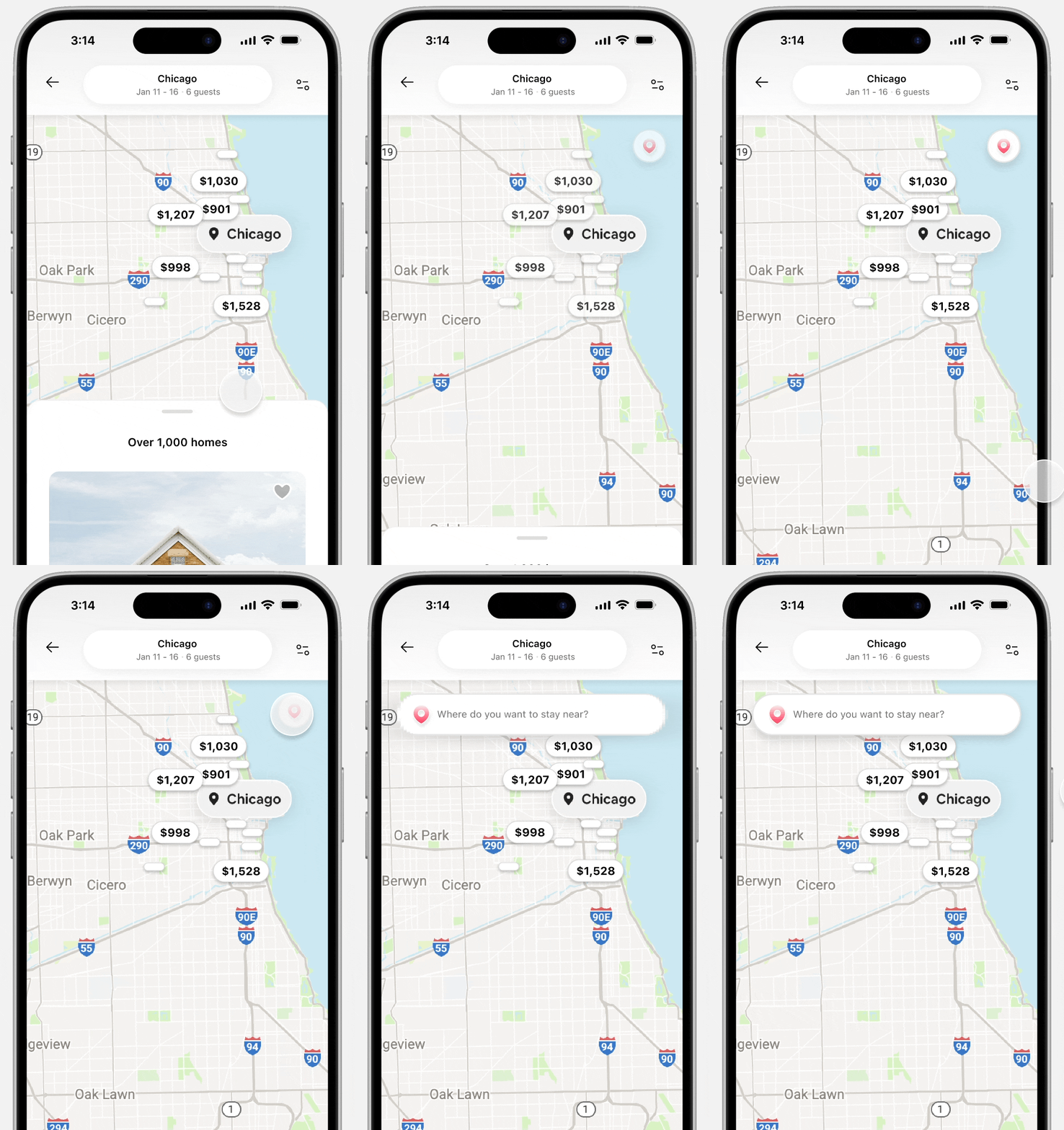
Expanded State
Pro: Reduces click
Con: Occupies Map Interface
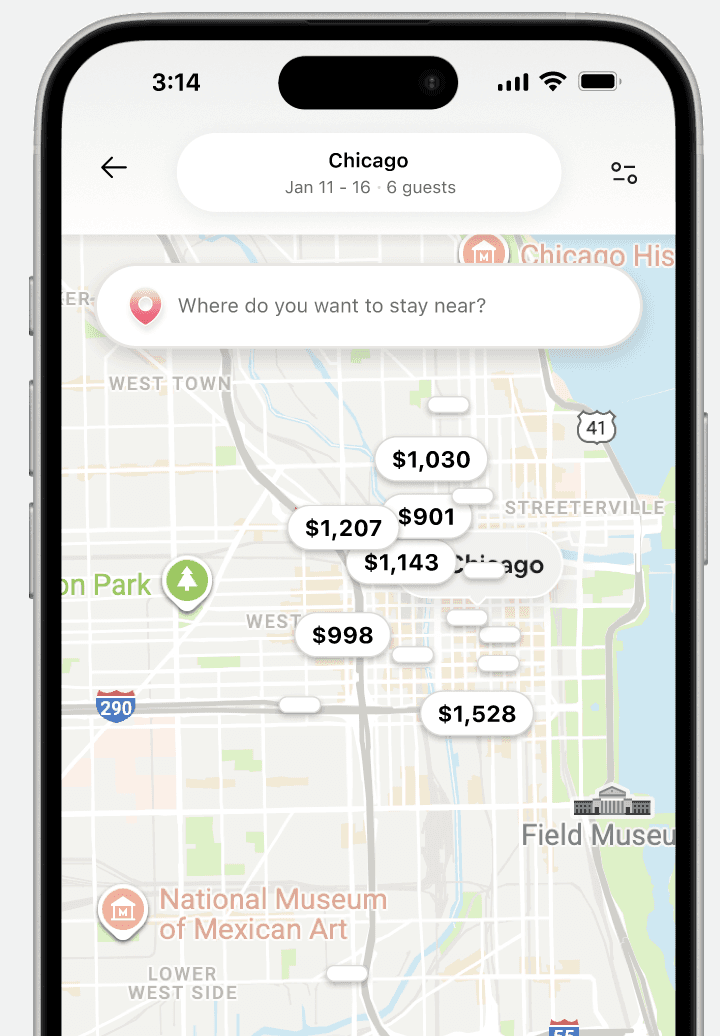
We tested the closed state to see if users could easily recognize how to access the feature. If they could, it allowed us to minimize how much screen space it occupied.
Design Decisions
Evaluating task-based vs. stage-based organization
Task-Based:
Helps users quickly find and act on specific information, regardless of where they are in the trip.
Journey-Based:
Aligns with users' mental timeline, making it easier to surface the right information at the moment they need.
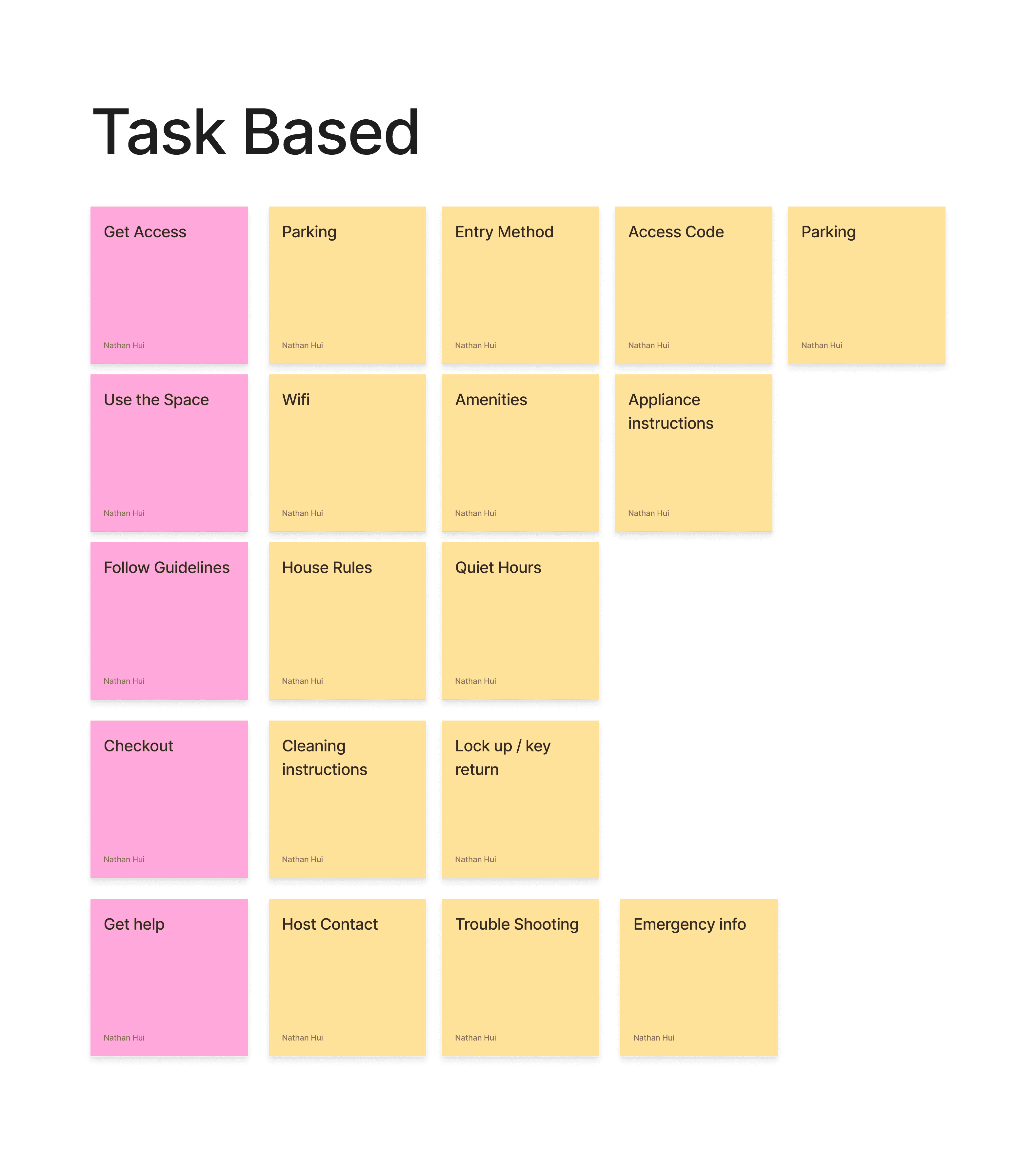
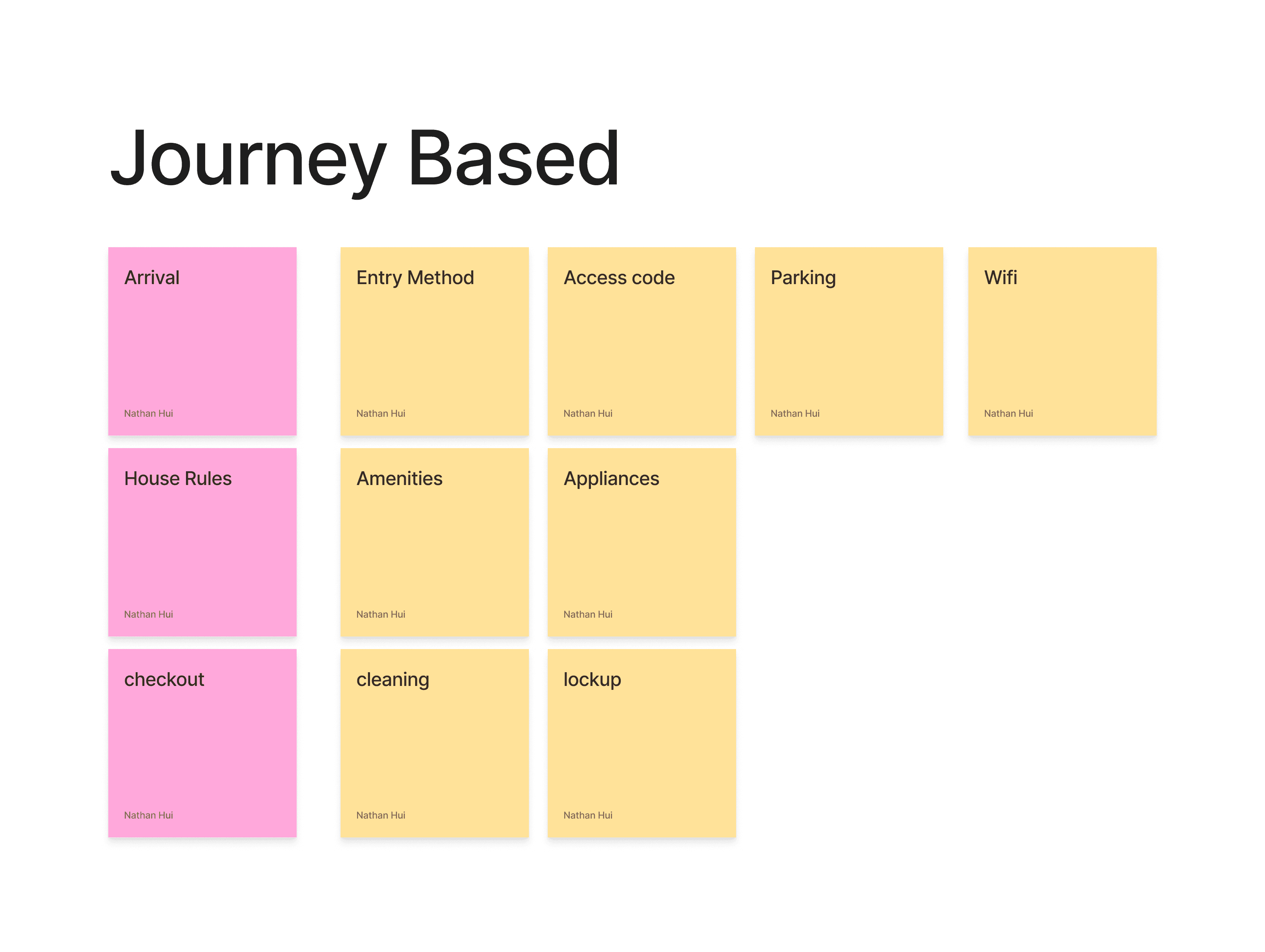
To determine the most intuitive way to present information, we explored both organizational models and tested both models with different users.
Research
User Testing
Can the users recognize how to access feature in its closed state?
To guide our entry point decision, we tested with 8 novice Airbnb users.
Because Airbnb isn't used daily, bot requirements were evaluated through the lens of memorability- whether users could recall how to find and use the feature over time, and we focused our study on these 2 criterion.
Discoverability: Users notice the entry point without being told
Clarity: Users understand how it works after opening the search bar
7/8
Users were able to locate the feature on the first try
8/8
Users were able to complete the successfully task with no errors

*Image was blurred to protect participant confidentiality
User Testing
Which organization model was more intuitive?
We conducted 2 different test witch each organization model with different participants to avoid learning bias. Participants were given realistic scenarios, such as finding entry instructions or Wifi details-and asked to navigate the interface.
Journey-based model performed better
Most information is only relevant at a specific moment, so it provides contextual guidance that enables faster, more efficient navigation.
In task-based information, it forced users to scroll and dig through details that they rarely use.

Simulation of arriving to a Stay
Final Solution
Finalizing The Solution
Grounded in user testing insights, we redesigned the experience to better align with users’ mental models across the discovery and stay phases. By reducing cognitive load and clarifying where key actions and information live, the final solution supports more confident decision-making and smoother interactions throughout the journey.

Radius based search for trip intent

Journey-based organization model for trip details
Key Learnings
-Prototyping quickly and testing early helped uncover key insights that informed our design decisions. Rather than trying to predict user needs, I learned the importance of validating them through direct testing and conversations with users.
-Regular collaboration and discussions helped us synthesize findings more effectively and make more confident design decisions and directions as a team.
Airbnb
Airbnb is the world's leading platform for short-term rentals, connecting travelers with unique stays across 8M+ listings worldwide.
My Team redesigned the search and stay experience to help users quickly find accommodations aligned with their trip intent.
Results:
36%
Decrease in time on task on finding a stay
76%
Increase in confidence when booking stay
7-Point Likert Scale
50%
Decrease in time to locate trip information
The Mission
Designing for the full journey
Airbnb has millions of listings, but more options don't mean easier trip decisions. Across the user journey, two phases stood out: discovering the right place and managing the trip once booked. This project aims to reduce friction at both ends of that journey.
Friction points in user journey and touchpoints
Key Insight
Navigating Airbnb's nature of diversity
Airbnb's diversity of listings is its strength.
But it creates variability, making it hard for users to compare options, especially when it comes to location.
Key Insight
Trip details is fragmented
All information about their stay is on Airbnb.
However, it is scattered across messages and trip details, leaving them unsure where to find it.
Solution
Destination-driven stay discovery
Location was the deciding factor, but there was no way to anchor a search around it.
This led to a clear opportunity: reframe discovery around trip intent, giving users a way to search around where and how they want to stay.
Solution
Define what belongs in trip details and messages
The goal was to group essential stay information into what should belong in the trip details page and messages between the hosts. This will make it easier to help users find information, while also freeing up messages for host communication.
Trip Details (System-Owned)
Trip Summary
Logistics: Access and Checkout
House & Stay Rules
Stay Information
Messages
Human Communication
Recommendation and Tips
Situational Updates
Design Decisions
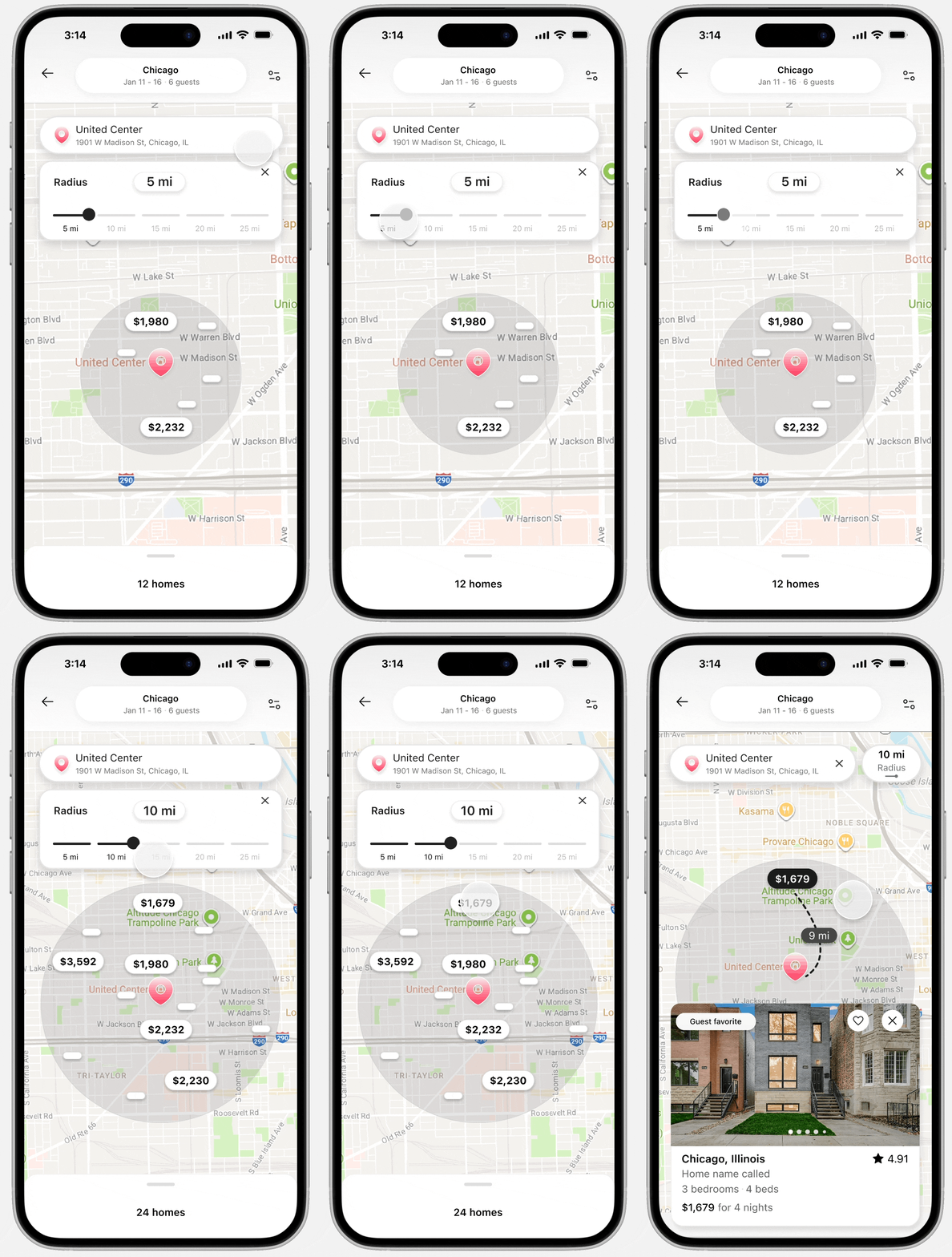
Radius search entry point: considering map real estate
Once we decided to place the feature on the map interface, we needed to decide to introduce it without compromising the map experience. We explored two approaches:
Collapsed entry point: expands on tap, keeps the map clean and fully usable, but requires users to discover first.
Persistent search bar: always visible, immediately accessible, but takes up significant screen real estate and clutters the map for users not using the feature.
Collapsed entry point
Con: 1 extra click
Persistent search bar
Pro: Reduces click
Con: Occupies Map Interface
Pro: Keeps map free and usable
Design Decisions
Evaluating task-based vs. journey-based organization
With details now separated from messages, the next question was how to structure the information itself. We explored two approaches:
Task-based: organizes by action, helping users to quickly find and act on specific information regardless of where they are in the trip.
Journey-based: organizes around the trip timeline, surfacing the right information at the moments users actually need it.
Research
User Testing
Can the users recognize how to access feature in its closed state?
Since Airbnb isn't used daily, we evaluated through the lens of memorability - could users find the use of the feature over time without being prompted? We tested with 8 novice users across 2 criteria:
Discoverability - Users notice the entry point without being told it exists
Clarity - Users understand how the feature works
7/8
Users were able to locate the feature on the first try
8/8
Users were able to complete the successfully task with no errors
*Image was blurred to protect participant confidentiality
User Testing
Which organization model was more intuitive?
We conducted 2 different test witch each organization model with different participants to avoid learning bias. Participants were given realistic scenarios, such as finding entry instructions or Wifi details-and asked to navigate the interface.
Journey-based model performed better
Most information is only relevant at a specific moment, so it provides contextual guidance that enables faster, more efficient navigation.
In task-based information, it forced users to scroll and dig through details that they rarely use.
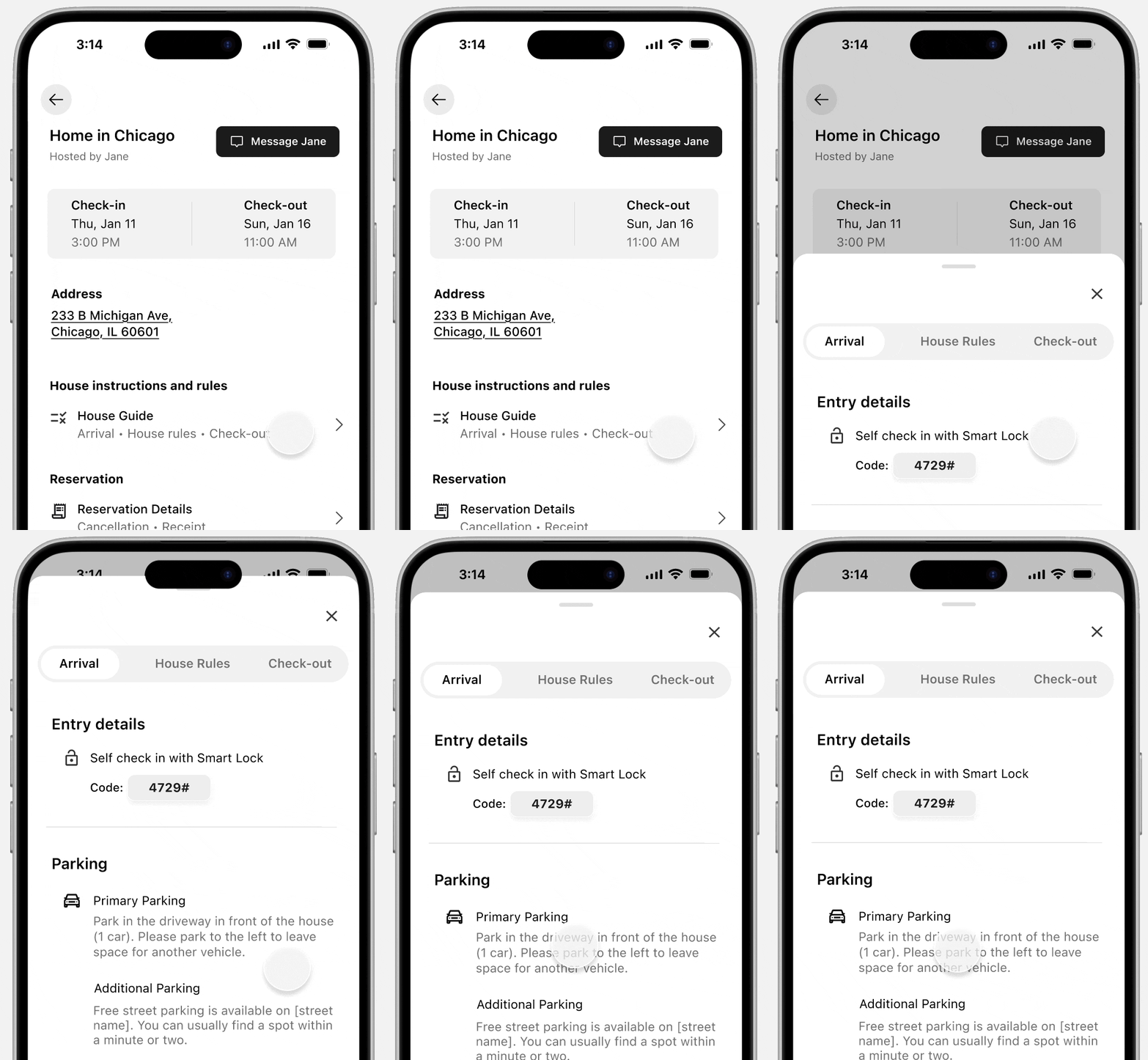
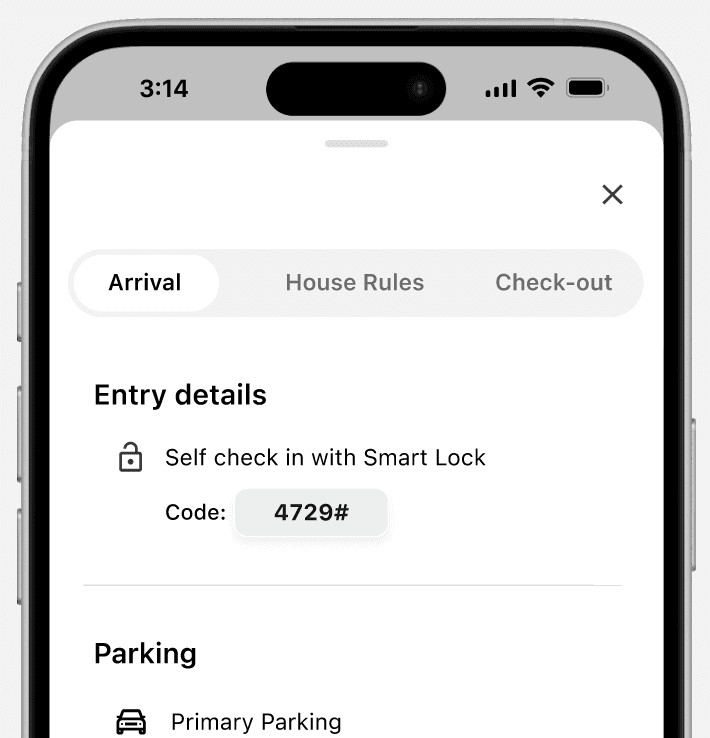
Simulation of arriving to a Stay
Final Solution
Finalizing The Solution
Grounded in user testing insights, we redesigned the experience to better align with users’ mental models across the discovery and stay phases. By reducing cognitive load and clarifying where key actions and information live, the final solution supports more confident decision-making and smoother interactions throughout the journey.
Radius based search for trip intent
Journey-based organization model for trip details
Key Learnings
-Prototyping quickly and testing early helped uncover key insights that informed our design decisions. Rather than trying to predict user needs, I learned the importance of validating them through direct testing and conversations with users.
-Regular collaboration and discussions helped us synthesize findings more effectively and make more confident design decisions and directions as a team.
Next project: